
Some protective styles ask you to choose: neat braids, or loose flowing hair. Fulani braids refuse the choice — and that is exactly why the hybrid version is on every fall 2026 protective-style list. The pattern is the signature: cornrows braided through the front — usually a center cornrow with side cornrows sweeping back — and then loose, curly or wavy hair flowing free in the back, either as free-hanging braids, a crochet back section, or a partial sew-in. Experts carried the style over from summer straight into fall for one reason: versatility. It dresses up, it dresses down, it lasts up to four weeks with proper care, and your own hair stays tucked away from cold, dry air the whole time. This guide shows the three ways to build the back section, which human hair bulk does which job, and how to keep the cornrows neat and the curls alive — featuring three real picks from TotalBundles.
Why hybrid Fulani is winning fall 2026
Three things make this style stick. First, the front does the talking: the geometric cornrow pattern — center row, curved side rows, face-framing braids — is instantly recognizable and photographs beautifully, while the edges stay visible and cared for instead of buried under a full head of braids. Second, the back is your choice. Crochet curly hair onto cornrows in the back and the install is fast; sew bundles in as a partial sew-in and the curls move like a weave; braid the back into free-hanging individual braids and you get the classic full-braid finish. All three read as the same style from the front. Third, it is genuinely protective when it is installed right: moderate tension, no yanking at the hairline, and a wear window that matches your scalp’s comfort. Protective never means set-and-forget — it means your hair rests while you still moisturize, tie the rows down at night, and keep the loose back detangled.
What you’ll need
All three picks below are human hair bulk with no weft — the format braiding actually uses — verified live on totalbundles.com today, in stock with prices shown. Pick the Burmese curly bulk for the braids themselves, the pre-divided Burmese for a faster install, or the deep wave bulk for the loose curly back section.
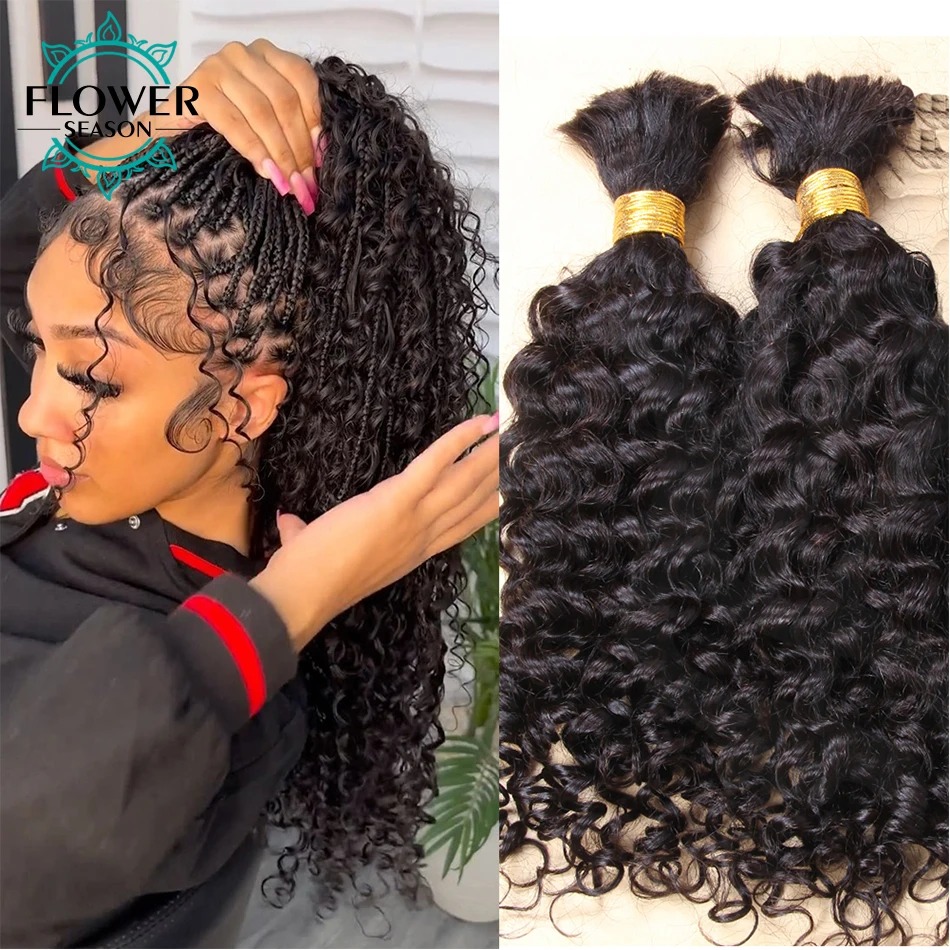
Bulk Human Hair for Braiding — Burmese Curly, No Weft, Double Drawn, 3 Bundles — from $54.99. The hero pick, and the workhorse for the whole front pattern: 100% human hair curly bulk, 100g per piece, in lengths from 12 to 26 inches and lots from 1 to 4 pieces. No weft means it feeds straight into cornrows and free-hanging braids — exactly what the Fulani center row, side rows, and back braids are built from. Double drawn keeps the braids full toward the ends instead of tapering thin, and the curly texture means any loose pieces left out at the back already match the style.
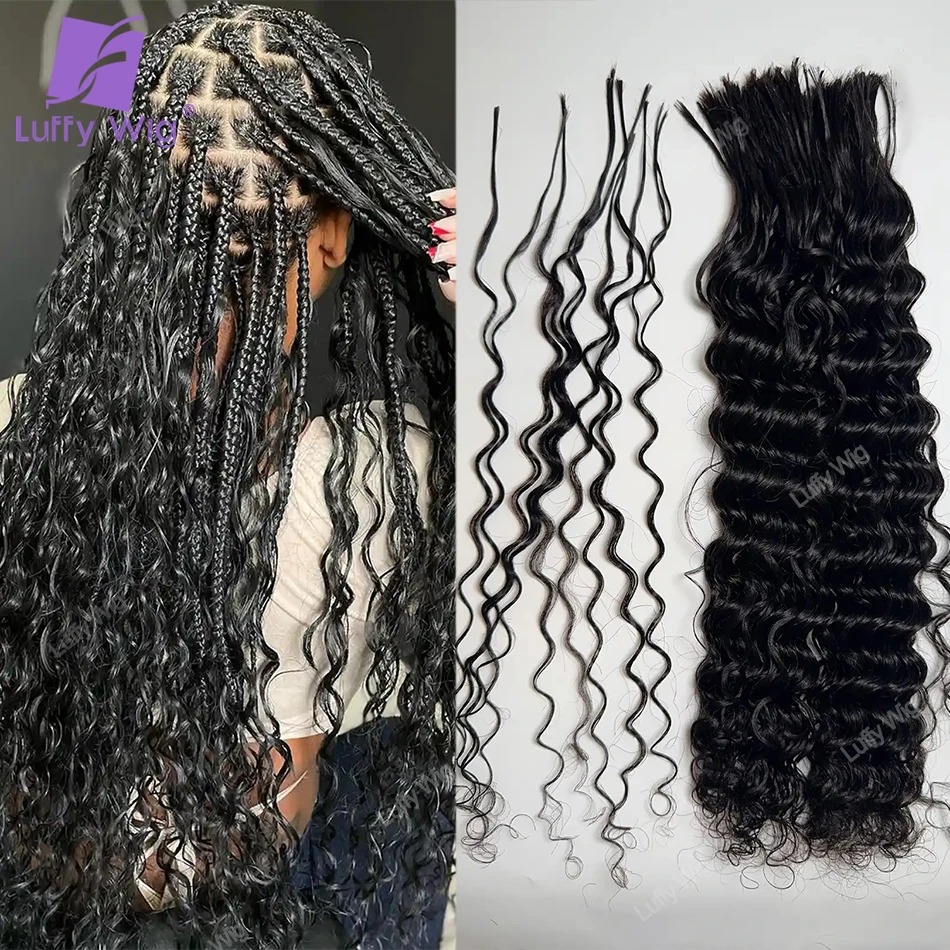
Pre Divided Braiding Curly Hair — Human Hair Bulk, Double Drawn Burmese Remy — from $57.99. The time-saver pick: Burmese Remy curly bulk that comes pre-divided — 160, 320, or 640 roots per lot at 95–100g — in 16, 18, and 20 inches. Fulani installs live or die on clean, even parting, and pre-divided roots hand you consistent sections from the first braid, which is how a first solo install stays in the four-to-six-hour range instead of running all day. Pair it with the Burmese curly bulk above — pre-divided for the free-hanging braids, loose bulk for the feed-in cornrows.
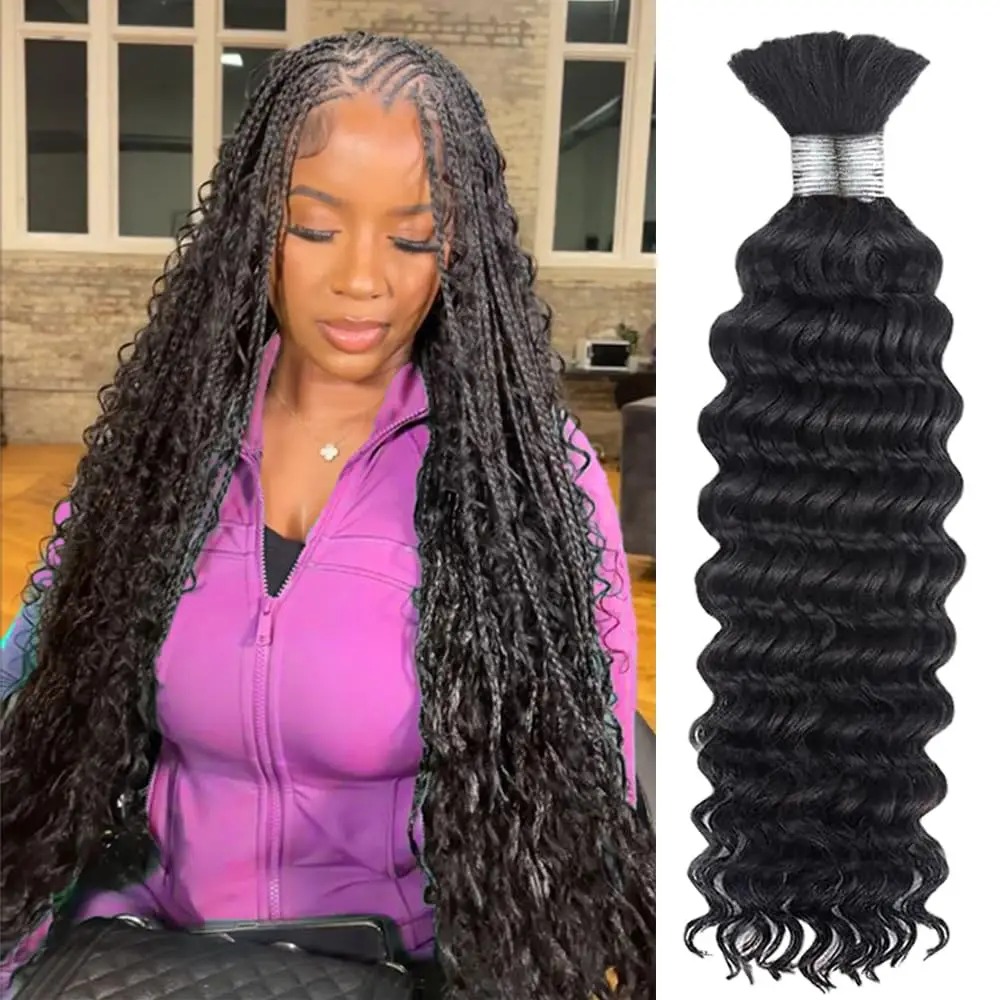
Human Braiding Hair 100g — Deep Wave Bulk for Braiding, No Weft — from $48.99. The back-section pick: 100g of Brazilian Remy bulk in deep wave, water wave, body wave, or straight, in lengths from 20 to 28 inches. This is the hair that becomes the loose, flowing back of the hybrid — crochet it onto the back cornrows for the fastest install, or work it in as flowing pieces between the back braids for the goddess finish. The longer lengths are what give hybrid Fulani its cascade, and at the lowest starting price of the three, it is the easy add-on that turns a classic Fulani set into the 2026 hybrid version.
How to build hybrid Fulani braids, step by step
Step 1: Part first, braid second. The result comes from the parting, not the braiding. Map the center cornrow line, then the side sections, and clip everything you are not working on. Clean parts are what make the front pattern read as Fulani instead of generic cornrows — take your time here, because no amount of neat braiding fixes uneven sections later.
Step 2: Feed the cornrows in at moderate tension. Braid the center row and the side cornrows back, feeding in the Burmese curly bulk gradually for length and fullness. Keep tension moderate — if you feel pain, bumps, or pulling at the edges, the braid is too tight and it stops being protective. Loosen the hairline first; the style should feel secure, never sore.
Step 3: Braid the back, or leave it loose — on purpose. For classic Fulani, part the remaining back hair into roughly one-inch squares and braid free-hanging individuals, where the pre-divided Burmese bulk keeps every section even. For the hybrid, cornrow the back instead and crochet or sew in the deep wave bulk so the curls fall loose and full behind the patterned front.
Step 4: Finish the details. Beads, cuffs, and cowrie shells on the face-framing braids are the traditional finishing touch — add them at the ends, not the roots, so they never add tension. Lay your edges softly, and keep the loose back detangled with your fingers and a light mist before it ever sees a brush.
Keep Fulani braids fresh for the full wear window
Plan on four to eight weeks for a braided-back set and up to four weeks for a loose crochet or sew-in back — and maintain both halves differently. Tie the cornrows down with a satin scarf every night so the rows stay neat and frizz stays down. Keep your scalp moisturized along the parts, and mist the braids lightly rather than soaking them with product. The loose back needs the curly-hair routine: lightweight moisture, gentle finger-detangling, and no heavy oils that mat the curls together. Wash carefully around the rows when your scalp asks for it, dry fully before tying down, and take the style down on schedule — a protective style worn past its window stops protecting. Do that, and hybrid Fulani carries you through fall with your own hair rested, moisturized, and growing underneath.
Ready for the pattern in the front and the cascade in the back? Shop the Burmese curly bulk, the pre-divided Burmese Remy, and the deep wave braiding bulk now at totalbundles.com — Total Beauty & Confidence Starts At The Crown.